
WELCOME BONUS 300%
UP TO €2000 + 100
FREE SPINS
UP TO €2000 + 100
FREE SPINS
Home → Blackjack
Blackjack at Spin Ally: Variants, Rules and Payouts
Error insurance: 7 percent additional house edge
The Blackjack Insurance side bet carries a steep 7.47% house edge when played with six to eight decks, making it one of the worst wagers available at the table. This figure stands in stark contrast to the 0.15% house edge found in single-deck games with standard 3:2 payouts, highlighting the severe cost of this optional protection. Accepting this wager drains bankrolls significantly faster than playing the main game without any side bets attached to the hand.
Insurance pays 2:1 if the dealer holds a blackjack, but the probability of the dealer showing an ace is low enough that the mathematical expectation remains deeply negative for the player. The base strategy explicitly forbids taking insurance unless the true count reaches plus three or higher through card counting techniques, which are rarely permitted in online environments. Most players ignore this exception and lose money on every insurance bet placed during standard play sessions.
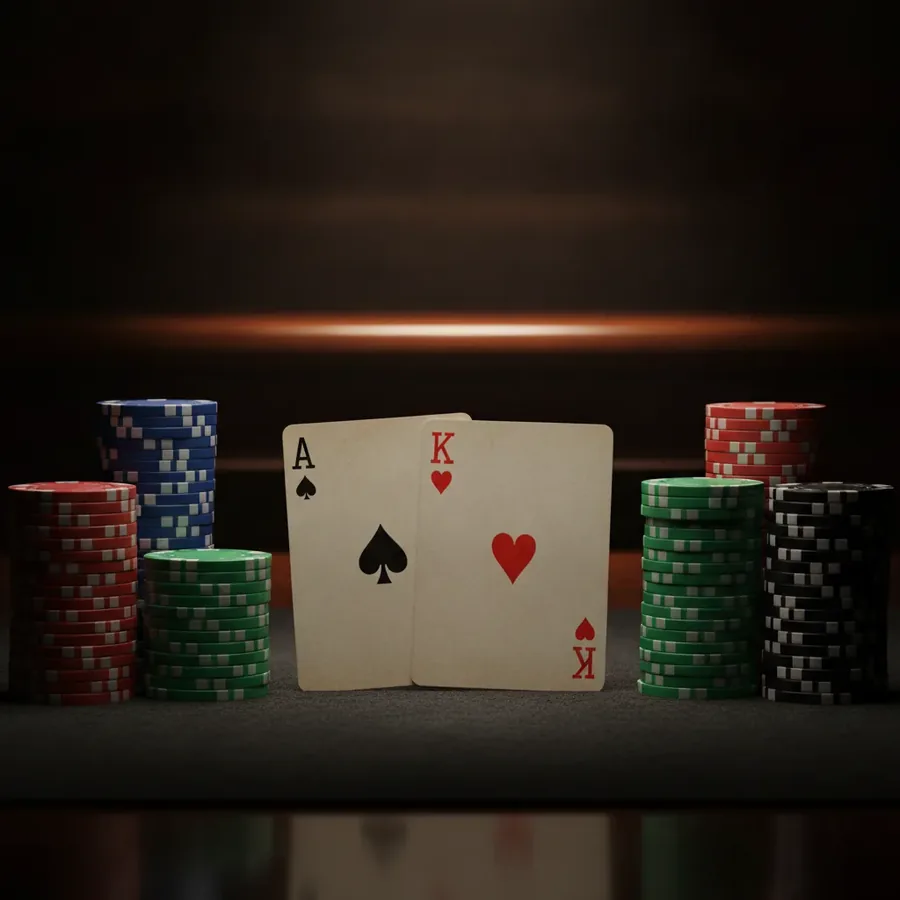
Insurance Pays 2:1 Yet Still Costs Money
While the Insurance payout ratio offers 2:1 returns, the underlying probability structure ensures that the casino retains a 7.47% advantage over the long term in multi-deck shoes. This specific return percentage applies only when the side bet limit reaches fifty percent of the original main wager, creating a scenario where losses accumulate rapidly during losing streaks. Players chasing quick recoveries often fall into this trap by betting heavily on insurance during unfavorable counts.
Double Down vs Simple Hit on 11
Double Down allows players to double their initial stake when holding an eleven, offering a strategic opportunity to maximize profits against weak dealer upcards like four, five, or six. This rule is strictly limited to situations where the player holds exactly two cards initially, preventing doubling after splits or on hands with three or more cards drawn. The decision to double versus simply hitting depends entirely on the dealer's visible card and the specific house rules governing soft and hard totals.
Why Loss Progression Quickly Reaches Table Limit
Table limits restrict how much a player can wager on any single hand, meaning that aggressive loss-chasing strategies inevitably hit a ceiling that prevents further recovery attempts. Quantum Blackjack Plus Live permits stakes ranging from one to five thousand euros, while Lightning Blackjack caps its maximum bet at two thousand five hundred euros per round. These upper boundaries force players to stop escalating their bets once they reach the predefined maximum, effectively neutralizing any progressive betting system designed to recoup previous losses.
Split, Double Down, and Surrender in Numbers
Resplitting Aces improves the player's theoretical return by approximately 0.08 percentage points, while allowing doubling after split adds another 0.14 percentage points to the overall expected value. Late Surrender contributes a modest 0.08 percentage point reduction in the house edge, provided the player exercises discipline to forfeit half their bet rather than risk total loss. Combining these liberal rules creates a favorable environment where skilled players can significantly lower the casino's advantage compared to restrictive rule sets.
Blackjack variants at a glance
| Variant | Payout | House edge | Rule | Bet range |
|---|---|---|---|---|
| Blackjack Liberal Vegas Strip (liberale Regeln, 3:2) | 99.72% | 0.28% | Günstigste Regelkombination: S17 + DAS + Resplit + Late Surrender. Standardabweichung 1,15 | Blackjack 3:2, Gewinn 1:1 |
| Blackjack Split / Double / H17 – Regel-Effekte | n.a. (Regel-Modifikatoren) | H17 +0.22 Prozentpunkte; RSA −0.08 Prozentpunkte; DAS −0.14 Prozentpunkte | Dealer Hits Soft 17 verschlechtert RTP um 0.22 Prozentpunkte; Resplit Aces verbessert um 0.08 Prozentpunkte; Double After Split verbessert um ca. 0.14 Prozentpunkte; 6 Decks statt 8 – ca. 0.02 Prozentpunkte. | Double – Einsatz ×2 mit einer Karte; Split – bis 4 Hände; Ass-Split meist mit einer Karte. |
| Blackjack Ein Deck, klassische Regeln, 3:2 | 99.85% | 0.15% | Weniger Decks = niedrigerer Vorteil; ein Deck gibt ca. −0.48 Prozentpunkte gegenüber 8 Decks. Oft durch 6:5 Auszahlung kompensiert. | Blackjack 3:2, Gewinn 1:1 |
| Blackjack 6 Decks, S17, DAS, DOA, Auszahlung 3:2, Basisstrategie | 99.54% | 0.46% | Dealer steht auf Soft 17; Verdopplung auf jeder Zweierkarte; Verdopplung nach Split erlaubt; keine Aufgabe. Basisstrategie ist für diesen Wert zwingend | Blackjack 3:2, normaler Gewinn 1:1, Insurance 2:1 |
| Blackjack Auszahlung 6:5 statt 3:2 (6 Decks) | 98.15% | 1.85% | Ersatz von 3:2 durch 6:5 fügt exakt +1.39 Prozentpunkte zum Vorteil des Casinos hinzu – stärker als jede andere Regeländerung. Bei $10 Einsatz zahlt Blackjack $12 statt $15. | Blackjack 6:5, Gewinn 1:1 |
| Blackjack Surrender (Late Surrender) – Regel-Effekt | n.a. (Regel-Modifikator) | −0.08 Prozentpunkte | Spieler gibt Hand nach Dealer-Blackjack-Prüfung auf, verliert die Hälfte des Einsatzes. Verbessert RTP um ca. 0.08 Prozentpunkte. Early Surrender ist wesentlich wertvoller (bis −0.6 Prozentpunkte), aber extrem selten. | Rückzahlung 50% des Einsatzes |
Unlimited seats via a split dealer hand
Lightning Blackjack from Evolution offers a maximum stake of 2,500 EUR per round. This high-limit table allows an unlimited number of players to join the same session simultaneously. The shared seating model removes physical constraints on participation. Multiple users can place bets concurrently without waiting for a free chair.
The game utilizes standard blackjack rules with a theoretical return of 99.56%. Players benefit from lightning multipliers that can reach up to 25x on winning hands. These random modifiers apply to specific card combinations during the deal. The payout structure remains consistent with standard blackjack wins at 1:1.
This format supports high-volume betting strategies due to the lack of seat limits. Participants can engage with stakes ranging from 1 EUR to the 2,500 EUR cap. The software handles all side bets and main wagers efficiently. The live dealer manages the shoe while the system tracks individual outcomes.
Six Card Charlie Pays Immediately with Six Cards
Blackjack Liberal Vegas Strip features liberal rules that include a six-card charlie provision. A player who draws six cards without busting automatically wins the hand. This rule applies regardless of the dealer's final total or hole card. It significantly alters the risk profile for aggressive hitting strategies.
The game maintains a 3:2 payout for natural blackjacks and a 1:1 rate for standard wins. The house edge stands at a low 0.28% when optimal strategy is applied. This favorable edge results from the combination of S17, DAS, and resplitting capabilities. The standard deviation is recorded at 1.15 for this specific variant.
Players utilizing this rule can extend their hands beyond the typical five-card limit. The automatic win condition reduces the probability of busting on later draws. It provides a mathematical advantage in specific deck composition scenarios. The rule does not apply if the dealer achieves a higher total before the sixth card.
Resplitting aces is permitted in this environment, further enhancing player flexibility. The late surrender option adds another layer of strategic depth to decision making. These combined features create one of the most player-friendly rule sets available. The RTP reflects these generous conditions at 99.72 percent.
Stand-on-17 Rule and Its Meaning for Players
Blackjack 6 Decks specifies that the dealer must stand on soft 17 (S17). This rule prevents the dealer from drawing an additional card when holding an ace and six. Standing on soft 17 is generally more favorable to the player than hitting. It reduces the frequency of dealer improvements on marginal totals.
The difference between standing and hitting on soft 17 impacts the house edge by 0.22 percentage points. Hitting increases the casino's advantage significantly compared to standing. This modifier is critical for calculating the true expected value of a session. Players relying on basic strategy must adjust their expectations accordingly.
Games offering Dealer Stands on Soft 17 typically exhibit lower house edges. The 6-deck shoe configuration contributes an additional 0.02 percentage point reduction. Combining S17 with Double After Split yields a cumulative benefit of approximately 0.14 points. These rule variations directly influence the long-term return percentage.
The base strategy for this variant assumes the dealer stands on soft 17. Deviating from this assumption leads to suboptimal decisions and higher losses. Insurance bets remain unfavorable regardless of the dealer's soft 17 status. The overall RTP for this setup is 99.54 percent under perfect play.
Six Decks to Eight Decks in the Shoe
Blackjack Auszahlung 6:5 utilizes a six-deck shoe for its dealing process. Increasing the number of decks from one to eight raises the house edge by approximately 0.48 percentage points. Fewer decks generally provide better odds for the skilled player. The impact is most pronounced when counting cards or tracking penetration.
Single-deck games often compensate for their advantage with restrictive rules like 6:5 payouts. A single deck offers a theoretical return of 99.85% with standard 3:2 blackjacks. Multi-deck games shift the balance toward the casino through increased penetration difficulty. The statistical variance changes with each additional deck added to the shoe.
The 6-deck configuration balances operational efficiency with reasonable player odds. It allows for continuous shuffling mechanisms or longer running shoes. Most modern tables prefer six to eight decks to minimize card counting effectiveness. The house edge rises incrementally as the deck count increases.
Quantum Blackjack Plus Live operates within a similar multi-deck framework. Its RTP of 99.57% reflects the complexity of quantum multiplier mechanics. The number of decks influences the frequency of specific card combinations. Players should note that deck penetration affects the reliability of basic strategy.
Early Surrender is removed from many tables
Late Surrender is available in Blackjack Liberal Vegas Strip and reduces the house edge by 0.08 percentage points. Players may forfeit half their bet after the dealer checks for blackjack. This option is only permissible if the dealer does not hold a natural. It provides a crucial escape route for hands totaling 15 or 16 against strong dealers.
Early Surrender allows players to quit before the dealer reveals their hole card. This rule can improve the player's edge by up to 0.6 percentage points. However, it is extremely rare in modern online and land-based casinos. Most operators have replaced early surrender with the less advantageous late version.
The absence of early surrender forces players to make riskier decisions on weak hands. Late surrender requires the dealer to pass the blackjack check first. This delay eliminates the immediate equity protection offered by early surrender. The loss in value is substantial for players frequently holding marginal totals.
Blackjack Party by Evolution focuses on entertainment rather than complex surrender options. Its 1,000 EUR stake limit and party atmosphere prioritize social interaction. Strategic nuances like surrender are secondary to the live host experience. Players seeking optimal math models should avoid such themed variants.
Soft Hand and Hard Hand Practically Distinguished
The distinction between soft and hard hands dictates the strategic approach in Blackjack variants like Liberal Vegas Strip, which offers a house edge of only 0.28 percent. A soft hand contains an Ace counted as eleven, allowing flexibility when drawing cards without immediate bust risk. This structural difference enables players to double down more aggressively compared to rigid hard totals.
In contrast, a hard hand lacks this Ace flexibility, forcing stricter adherence to basic strategy tables to minimize losses. The standard 6-deck game with S17 rules maintains a higher house edge of 0.46 percent due to these constraints. Players must calculate probabilities carefully, as hitting on hard 17 typically results in a loss against dealer upcards of seven or higher.
Understanding this mechanic is crucial for managing bankroll expectations during extended play sessions at Spin Ally. The theoretical return of 99.54 percent assumes perfect execution of these distinctions across thousands of hands. Misinterpreting a soft 17 as a hard total can increase the effective house edge significantly over time.
Card Counting at Shuffle Master Table: why it fails
Card counting strategies rely on tracking high and low cards remaining in the shoe to gain a statistical advantage over the casino. However, modern implementations like Quantum Blackjack Plus Live utilize continuous shuffling mechanisms that reset the deck composition after every round. This technological barrier renders traditional counting methods ineffective for gaining any meaningful edge.
Evolution's Lightning Blackjack also employs random number generation to determine multipliers, further obscuring any predictable patterns from previous outcomes. The RTP remains fixed at 99.56 percent regardless of past results, eliminating the variance needed for profitable counting systems. Players cannot anticipate multiplier triggers based on historical card distribution data.
Consequently, attempting to count cards at these specific live tables yields no long-term benefit despite theoretical possibilities in other formats. The house edge stays constant because the game mechanics prevent the depletion of favorable card clusters. Gamblers should focus on optimal betting strategies rather than futile attempts to track shuffled decks.
What Hole Card Means at a Live Table
In traditional online blackjack, the hole card represents the dealer's face-down card, checked immediately if the upcard is an Ace or ten-value. At live tables such as Evolution's Blackjack Party, this concept evolves into real-time video streaming where dealers reveal cards sequentially. The visual confirmation ensures transparency while maintaining the tension of unknown variables during gameplay.
The presence of a hole card affects insurance decisions, as players bet on whether the dealer possesses a natural twenty-one before acting. Insurance pays 2:1 but carries a steep house edge of 7.47 percent, making it generally unfavorable for non-counters. Strategic avoidance of this side bet preserves the overall expected value of the primary wager significantly.
Live dealers handle the hole card manually, introducing human elements that RNG games cannot replicate in terms of pacing and interaction. Quantum features in Playtech games add multipliers to winning hands involving the hole card, altering standard payout structures. These variations require adjusted strategies to account for potential bonus payouts alongside base game wins.
Live Table vs RNG Table: Speed and Limits
Live table games like Lightning Blackjack operate within defined betting limits ranging from 1 EUR to 2,500 EUR per hand. This range accommodates both casual players and high rollers seeking substantial exposure to quantum multipliers affecting their wagers. The physical dealer presence introduces slight delays compared to instantaneous RNG outcomes, impacting overall session duration.
RNG counterparts often feature wider limit ranges and faster decision cycles, allowing for quicker accumulation of wagering requirements under bonus terms. Spin Ally's welcome bonus includes a 300 percent match up to 2,000 EUR, requiring careful allocation between slow live games and fast slots. Slots contribute 100 percent toward turnover, whereas table games only count for 10 percent of the requirement.
Choosing between these formats depends largely on player preference for social interaction versus speed and efficiency in meeting bonus conditions. Live tables offer immersive experiences with moderation but lower contribution rates to promotional objectives. Understanding these operational differences helps optimize bonus utilization strategies effectively across different game types.
Splitting tens costs expected value: better stand
Splitting a pair of tens separates two strong hands totaling twenty, reducing each to a single ten-value card facing the dealer. Statistical analysis shows that standing on twenty yields a higher expected value than splitting, as twenty wins against most dealer upcards. Breaking this combination exposes the player to greater risk without commensurate reward potential.
Resplitting Aces improves the RTP by approximately 0.08 percentage points in liberal variants, highlighting the value of aggressive splitting in specific contexts. Conversely, splitting tens increases the house edge by removing a near-guaranteed winning position from the player's inventory. Basic strategy charts universally advise against this move due to its negative impact on long-term returns.
Players adhering strictly to optimal strategy will consistently choose to stand on hard twenty, preserving capital during volatile sessions. The difference in expected value accumulates significantly over hundreds of hands played at standard betting levels. Deviating from this rule for speculative reasons undermines the mathematical foundation required for sustainable gambling practices.
Contact
Live - online chat
Banking









Providers












Allyspin Casino 2026